The UK labour market faces a clear challenge. Official data from the Office for National Statistics (ONS) shows that over 1 million young people aged 16 to 24 are currently not in education, employment, or training (NEET). That represents roughly 13.5% of young people across the country who are seeking a route into sustained work or study.
At the same time, organisations are actively seeking talent to fill open roles, expand their teams, and improve productivity. Research from Impetus estimates this post pandemic surge is now costing the UK economy £27bn in lost GDP every year.
By aligning educational preparation with modern workplace expectations, we can make it easier for young people to step confidently into their first roles.
While academic qualifications and technical training build knowledge, the essential skills of Listening, Speaking, Problem Solving, Creativity, Adapting, Planning, Leadership, and Teamwork are critical for putting this knowledge into practice effectively.
When young people explicitly learn and practise these essential skills, their knowledge becomes easier to apply in a professional environment.
Moving beyond ‘soft skills’: The case for explicit development
Capabilities like communication, adaptability, and teamwork can often be loosely categorised as ‘soft skills’, assuming individuals simply gain them through personal or professional exposure. In reality, evaluating these capabilities without explicit teaching and a shared framework creates an invisible barrier, often measuring a candidate's background and social access rather than their actual potential.
Our Essential Skills Tracker research highlights this clearly. Young people from lower socio-economic backgrounds have significantly fewer structured opportunities to build these capabilities during their education. When recruitment processes rely on informal or unmeasured expectations, candidates with access to broader personal networks naturally benefit most.
Essential skills are not fixed personality traits. They are practical, transferable capabilities that can be defined, taught, and evaluated step by step at every stage of education, employment and life.
When essential skills are taught with the same clarity and rigour used for literacy or technical subjects, the benefits for both young people and employers are immediate:
Clearer workplace expectations: Young people gain a shared vocabulary to express their strengths clearly during applications and interviews.
Faster onboarding: Early-career hires with strong listening, problem solving, and adaptability skills settle into their roles quickly and collaborate well with their teams.
Long-term adaptability: While technical knowledge may need updating as industries evolve, essential skills remain constant. They give individuals the core adaptability needed to step into new roles and sectors throughout their careers
Transforming talent pathways
When job descriptions replace general qualities like 'good communicator' or 'self-starter' with specific, measurable capabilities, applicants gain a much clearer understanding of how to demonstrate their strengths.
Using a structured framework changes this process completely. Employers can define the exact level of skill required for a role, such as a specific step in problem-solving or teamwork. Candidates can then show clear evidence of those capabilities.
This approach helps organisations assess potential fairly. It also gives new hires a clear pathway for ongoing development, linking early support directly to workplace progression.
The Universal Framework: Creating a shared language
At the Skills Builder Partnership, we work to build clear connections between schools, colleges, universities, non-profits, and employers.
At the core of this approach is the Skills Builder Universal Framework.
The Framework breaks eight essential skills down into 16 sequential, measurable steps. It creates a consistent language that stays with a young person as they move from education into work.
When an educator uses the same framework to teach problem solving that a hiring manager uses to structure a job description or apprenticeship assessment, the transition into work becomes straightforward. Young people understand what is expected, can track their progress, and can explain their capabilities with confidence.
Essential skills in action: Real-world impact
Across the UK, our partners are embedding the Universal Framework into their delivery to give young people the practical tools needed to step into work.
Street League
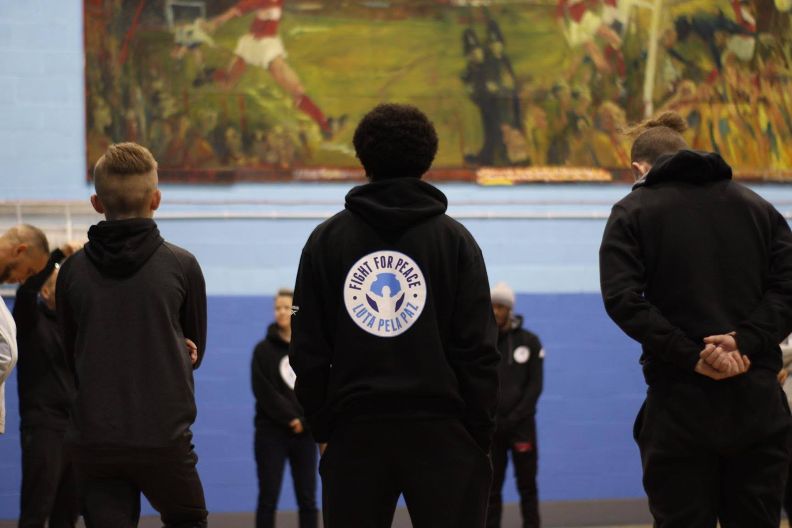
Street League uses sport and fitness alongside 10- to 12-week academies to support young people aged 16 to 30 who face barriers to employment. By mapping session activities directly to the Universal Framework, staff benchmark participants' skills in weeks 1, 5, and 10. This explicit tracking builds confidence, communication, and self-awareness, giving young people a structured pathway into roles across sectors, including the NHS.
Bridge the Gap Malvern
Bridge the Gap Malvern provides specialist Alternative Provision for 16- to 25-year-old students with Education, Health and Care Plans (EHCPs). They embed the Universal Framework across their core curriculum, focusing on self-management and communication skills like Listening, Speaking, and Adapting. By setting small, step-by-step targets, they help students build personal independence, self-advocacy, and sustainable routes into work.
Practical actions for employers and policy leaders
Supporting more young people into meaningful work is a practical goal that benefits both businesses and communities. Employers, HR professionals, and education leaders can take several clear steps today:
1. Define entry-level roles using clear skill steps
Review job descriptions and focus on the practical capabilities needed for the role. By setting entry-level requirements using the Universal Framework, you create open, merit-based selection processes that focus on genuine capability. The Standard Skills Classification UK Skills Explorer tool can be used to define skill development pathways for these roles.
2. Focus outreach and work experience on skill development
Design employer talks, mentoring, and work placements around explicit skill building. Ensure young participants leave these programmes with clear, demonstrable competencies they can use in future applications.
3. Support continuous learning on the job
Carry skill development into everyday line management and apprenticeship training. Using a shared Framework helps managers offer targeted feedback and support new employees as their responsibilities grow.
Building an inclusive, future-ready workforce
Creating better opportunities for young people is about building clear, effective bridges between education and employment. When we teach essential skills alongside academic and technical learning, we give every young person the tools they need to succeed in the workplace.
We equip our partners with the shared language and expertise to make the development of essential skills accessible for everyone, everywhere.
If you want to widen your talent pipeline or support your students' progress into employment, we invite you to partner with the Skills Builder Partnership. Together, we can use the Universal Framework to make career pathways clear, accessible, and fair for every young person.