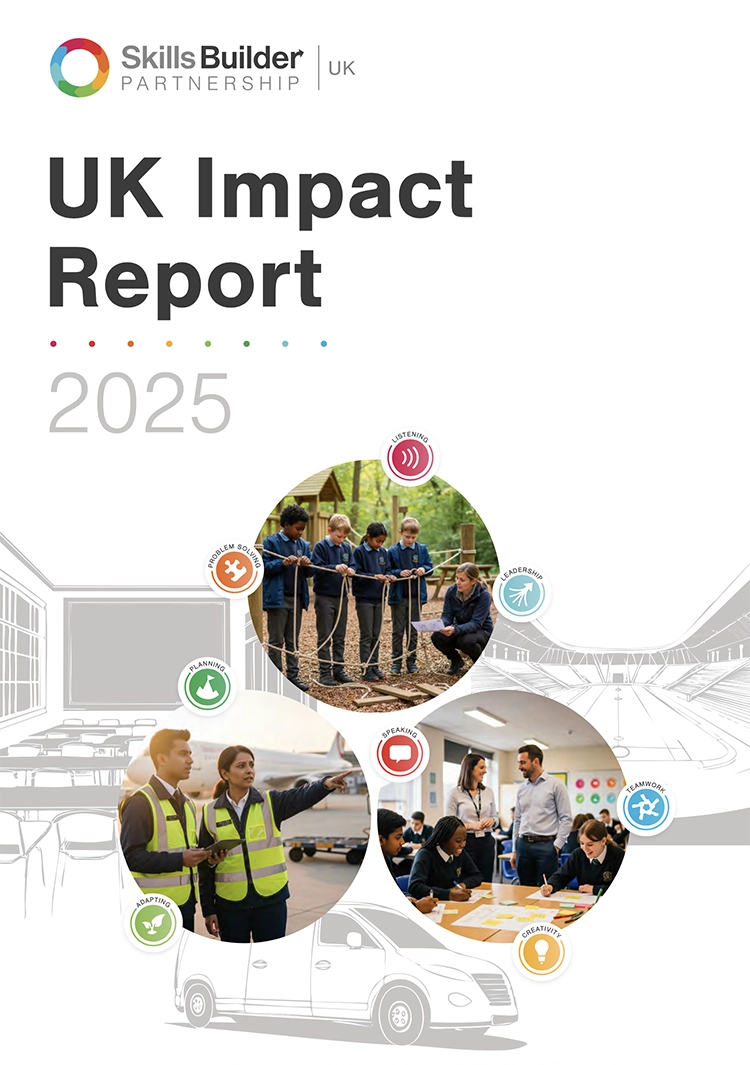
The Essential Skills Advantage: Human Skills in an Age of AI

The Essential Skills Advantage: Human Skills in an Age of AI provides a timely, data-driven look at how uniquely human capabilities complement accelerating technological transformation. Drawing on empirical data from the Essential Skills Tracker 2025, primary insights from international education leaders, and deep-dive country case studies, this insight paper demonstrates why highly transferable "essential skills" are the ultimate enabler in an AI-driven workforce.
Key Insights from the Report:
- The AI Skill Connection: Workers who frequently use AI in professional settings possess average essential skill scores that are 6% higher than non-users. Furthermore, those in the upper quartile of essential skill proficiency utilize AI 30% more at work, proving that extracting true value from advanced algorithms requires deep, human-centric capabilities.
- The Power Couple Premium: While regular AI use offers a wage advantage, individuals who pair high essential skill scores with frequent AI usage form an elite economic cluster. This cohort commands a mean annual income at least 53% higher than their peers, highlighting the financial return of marrying technical tools with human judgment.
- The Wellbeing Shock Absorber: Sudden or imposed AI implementation can spark worker anxiety, but highly developed essential skills act as a vital psychological buffer. Shifting an employee from the lower to the upper quartile in Adapting skills is associated with a 9% decrease in workplace anxiety, while upskilling in Speaking and Teamwork yields a 7% reduction.
- Diverse Global Models: Diverse economies are rapidly shifting away from rote learning to prepare young people with resilient, human-centric capabilities. This ranges from Colombia embedding emotional competencies directly into state college gateway exams, to Czech educators using custom generative AI agents to design classroom activities mapped directly to the Universal Framework.
While AI can generate raw concepts at lightning speed, it relies on human oversight—anchored in creativity, critical problem-solving, and communication—to refine, validate, and safely apply them. This report is essential reading for policymakers, educators, and business leaders looking to leverage the Skills Builder Universal Framework to help every young person lead alongside technology, rather than be replaced by it.