Bridging knowledge and practice: How essential skills unlock the future of the curriculum
Knowledge and skills are the foundations of a good education, giving young people the practical tools and understanding to step confidently into the world of work. Yet, predicting what that future workplace will actually look like remains a challenge, as many of tomorrow's careers do not even exist today.
As our roadmap to learning evolves, with the revised national curriculum scheduled for final publication in spring 2027 following the Curriculum and Assessment Review, one thing is clear: essential skills remain vital.
While technical knowledge and academic qualifications open doors, they are no longer enough on their own. To thrive in an unpredictable world, young people need essential skills like Listening, Speaking, Problem Solving, Creativity, Adapting, Planning, Leadership, and Teamwork.
These highly transferable skills act as the golden thread through every stage of education, shaping capable, adaptable, and confident individuals ready to keep pace with a fast-changing world.
Evolution, not revolution: Building a cohesive future for learning
The upcoming national curriculum changes focus on "evolution, not revolution", setting out to build communication, critical and creative thinking, self-management, and collaborative skills through the curriculum, enrichment, work experience, and careers education across all phases.
At the core of every recommendation is a single unified vision: education must do more than help students pass exams - it must equip them for life. Balancing rigorous subject content with essential, highly transferable skills ensures that every young person, regardless of their background, leaves school with both the qualifications to open doors and the personal agency to navigate an uncertain world.
What does this mean in practice?
- For teachers and schools
Less pressure to teach to narrow exam metrics, with greater flexibility to offer broader subject choices, creative subjects, and practical learning. This creates the space for explicit skill development linked directly to improved academic performance.
- For students
A curriculum that balances deep academic knowledge with modern competencies. Students experience less exam fatigue, clearer post-16 pathways, and lessons that explicitly address real-world challenges.
- Employers
A future workforce that possesses both technical knowledge and essential skills, making young people far more adaptable to new technology and changing job roles.
Why a shared framework is essential
To deliver on the ambitions of curriculum reform, schools need a common language. The Universal Framework is already used by over 950 education institutions, employers, and impact organisations to tackle the disadvantage gap and build these skills with rigour.
How the Universal Framework transforms learning:
Learners build self-awareness
Students see how the teamwork practised during a science project, the problem solving honed in a chess club, or the speaking developed in English transfer directly to the sports pitch, the drama studio, or a residential challenge.
Progress becomes measurable
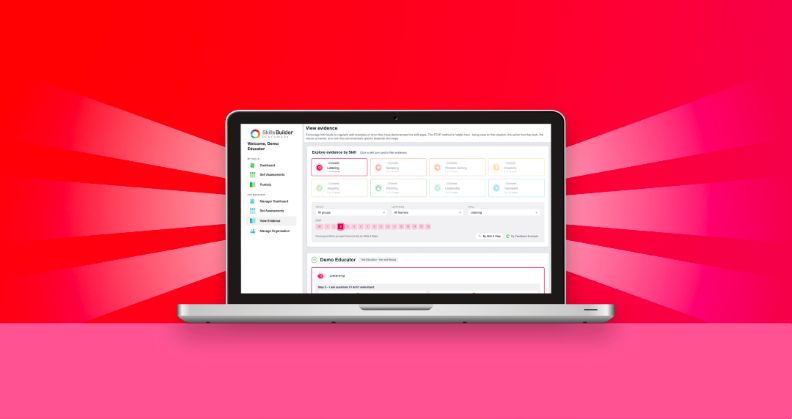
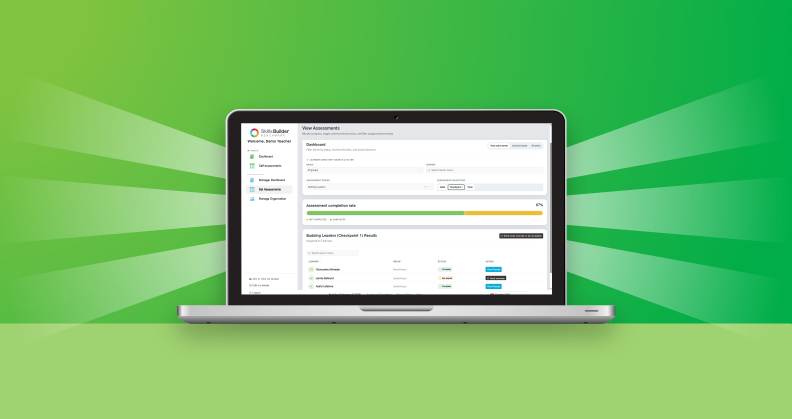
Instead of vague assertions about "building confidence”, educators track concrete progress along clear developmental steps.
Growth is celebrated
Students actively track their progression across diverse activities, celebrating tangible milestones in their personal development.
By embedding the Universal Framework, your strategy becomes both purposeful and measurably progressive. Essential skills become your golden thread, tying varied extra-curricular activities and classroom learning into a cohesive, transformative experience for every child.
Turning policy into practice across key priorities
The proposed updates across specific areas and enrichment priorities depend directly on explicitly taught essential skills. Here is how embedding the Universal Framework transforms learning experiences:
New statutory citizenship from key stage 1
Civic awareness requires active participation. Ready-made resources give young learners the practical tools to navigate complex societal issues from their earliest years:
- Interactive challenge days: Immersive experiences like ‘A Day in Politics’ turn abstract concepts of democracy and law into active debates where pupils hone Speaking, Listening, and Problem Solving.
- Real-world climate and media projects: Projects such as ‘Going Green’ and ‘Breaking News’ challenge pupils to evaluate sources critically, practice media literacy, and collaborate on sustainability solutions.
A universal enrichment entitlement
Enrichment shouldn't be an optional extra or a one-off trip. By embedding essential skills, extra-curricular activities become a structured path for personal development that meets and exceeds Ofsted expectations:
- Enterprise challenges: High-energy programmes such as the ‘Big Business Challenge’ or ‘Social Entrepreneur’ test planning and financial acumen as ideas are taken from concept to pitch.
- Broader access: Explicitly teaching skills like Creativity unlocks confidence in drama, art, and music, while targeted Teamwork and Leadership boost participation in team sports for every child - not just the naturally confident.
Oracy at primary level
The Universal Framework breaks Speaking and Listening into 16 sequential steps, taking children from basic turn-taking to compelling public address:
- Short lessons: Bite-sized, explicit oracy lessons integrate seamlessly into daily routines without taking time away from core subjects.
- Skill stories: Relatable narratives help our youngest learners understand how listening carefully and expressing feelings clearly helps them make friends and learn faster.
Supporting smooth transitions
Moving up a key stage or stepping into post-16 education can cause momentum to stall. Our report, Joining Up the Journey, proves that essential skills act as a psychological anchor during times of change:
- Transition pack: Practical resources explicitly build self management skills, equipping students to handle unfamiliar environments, larger workloads, and new social dynamics with resilience.
Enabling subject mastery
Streamlining the curriculum to reduce content overload opens up the space needed for true depth and cross-subject connections:
- A shared language across subjects: Universal skill definitions mean a student uses the exact same steps for Problem Solving in a Science lab as they do in a History or Design Tech project.
- Structured creativity in English: As English moves from functional literacy toward structured creative expression, teachers can use framework steps to set concrete targets for collaborative group tasks, performance, and public speaking.
A unified strategy for school leaders
For educators, these policy shifts represent a move towards an integrated strategy for learner progress. Rather than adding extra burdens to an already demanding timetable, embedding a structured framework allows schools to align their curriculum, enrichment, and careers guidance under one shared language.
By explicitly teaching and assessing essential skills alongside academic knowledge, institutions ensure that every policy directive delivers measurable, long-term impact for every learner.
Ready to transform curriculum reform into lasting impact for your learners?
Partner with the Skills Builder Partnership today to adopt the Universal Framework and build connected, accessible talent pathways across your institution.
We’re looking to work with new schools and colleges from January 2027. Contact us to find out more.