Public procurement: Why the new Social Value Model is a big opportunity for essential skills
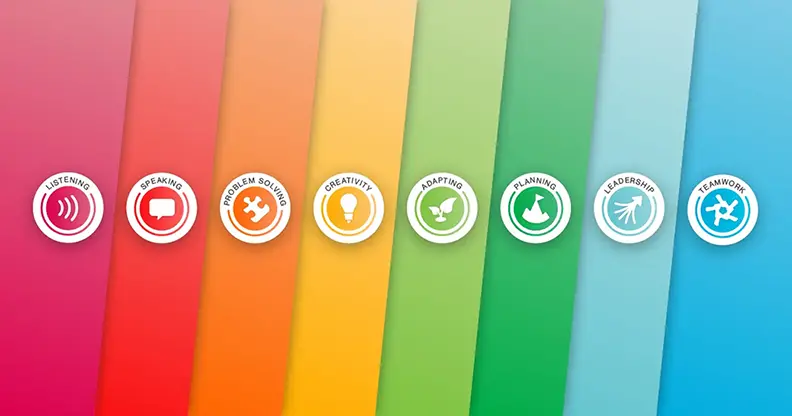
The government recently published detailed guidance on the Social Value Model for central government procurement, and at Skills Builder UK we were delighted to see essential skills explicitly named.
From January 1st 2027, whenever government tenders for large contracts governed by social value rules, buyers will have the option to score bids on how suppliers help priority groups build essential skills. This builds on the inclusion of essential skills in Skills England’s Employability Skills Framework and the UK Standard Skills Classification, alongside the Department for Education’s enrichment benchmarks. Across Whitehall, government departments are increasingly recognising the value of essential skills and now, public procurement can help build these skills at scale across education, business, and the third sector.
Setting a clear standard beyond generic employability
Under the new rules, procuring bodies must choose at least one criterion from a core set of outcomes, with essential skills featured directly under the talent pipeline theme. One specific sub-criterion focuses on activities that help target groups build essential skills to get into future employment or training.
What’s particularly encouraging is what isn’t there. Generic "employability skills" weren’t included in the same way. For too long, social value commitments around skills have risked becoming a tick-box exercise, a one-off CV workshop or an unmeasured careers talk. Tying a specific metric - the number of activities supporting the target community or cohort attain essential skills - to a recognised Universal Framework sets a higher standard. It puts structured, meaningful essential skills programmes in a much stronger position than generic, surface-level interventions.
And the impact reaches further than a single metric. Essential skills are also the foundation needed to deliver against a range of other outcomes across the model from getting people into good jobs to helping them progress once they're there:
- Sub-criterion 2a: Delivering training programmes to close skills gaps in target communities and cohorts and help people prepare for entry into the future contract workforce.
- Sub-criterion 2b: Supporting the contract workforce with career advice and clear pathways to progress into high growth sectors or areas falling skills shortages.
- Sub-criterion 2c: Running activities that support the target community or cohort build essential skills to facilitate entry into future employment or training.
Opening the door to stronger cross-sector partnerships
The guidance sets out clear target groups for this support: young people who are not in education, employment, or training (NEET) or at risk of becoming so, recent education leavers, care leavers, prison leavers, former military personnel, and people with SEND.
Reaching these groups effectively takes real collaboration between major suppliers, schools, colleges, and specialist charities. Helpfully, the guidance explicitly recognises that voluntary, community, and social enterprises (VCSEs) often deliver social value as standard practice. While social value commitments still need to go beyond the core contract specification, buyers can now factor that built-in social impact into scoring of bids. This creates a clear incentive for large contractors to partner with third-sector organisations that already know how to build essential skills well.
The guidance also introduces approved "community programmes" as one delivery route, though it makes clear these aren't prioritised over other approaches. As few ready-made community programmes focus deeply on essential skills, buyers who choose this outcome will likely look directly to bespoke partnerships between business, education, and charities to deliver it.
Seeing partnerships in action
For businesses looking to build these relationships, working through established networks, Skills Builder Partnership offers a route to connect with schools, colleges, and impact organisations already using a shared language for developing essential skills.
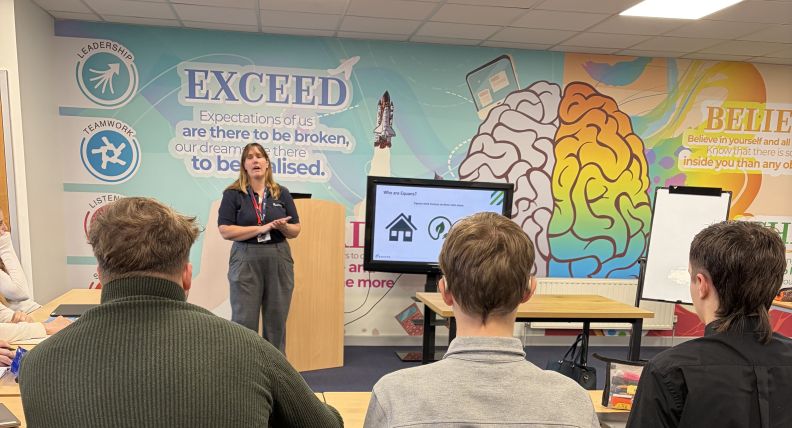
We have already begun working in this way through social value, as demonstrated by our partnership with CGI UK. Over the last two years, working alongside CGI has enabled us to deliver our flagship education programme to 27 schools. Through partnering, we have woven essential skills directly into everyday teaching across these schools. Last year alone, working with 15 schools in areas of low social mobility, we trained 432 teachers and enabled 2,965 learners to develop their essential skills.
Turning policy into lasting progress
The Cabinet Office will be tracking which criteria departments select and, crucially, how successfully suppliers deliver against them.
That gives all of us a valuable opportunity and a clear responsibility. When suppliers and their partners consistently deliver high-quality, impactful essential skills work where these criteria are used, we build a strong case for making them a permanent fixture of government procurement. Every well-evidenced programme we run helps show why essential skills belong at the heart of future public contracts.
The Social Value Model is another big step towards our mission that, one day, everyone will have the essential skills to succeed. With the new rules coming into effect in January 2027, now is the time for educators, charities, and businesses to come together, build strong delivery partnerships, and turn this policy into lasting change.
Start a conversation with us
Whether you are a supplier preparing for upcoming government bids, a school or college looking to connect with employers, or a charity supporting priority groups, we would love to explore how we can work together.
For businesses: Contact us about how we can support your social value goals for upcoming tenders.
For schools, colleges, and third sector organisations: Get in touch to understand more about our work and how it fits into the wider social value system.