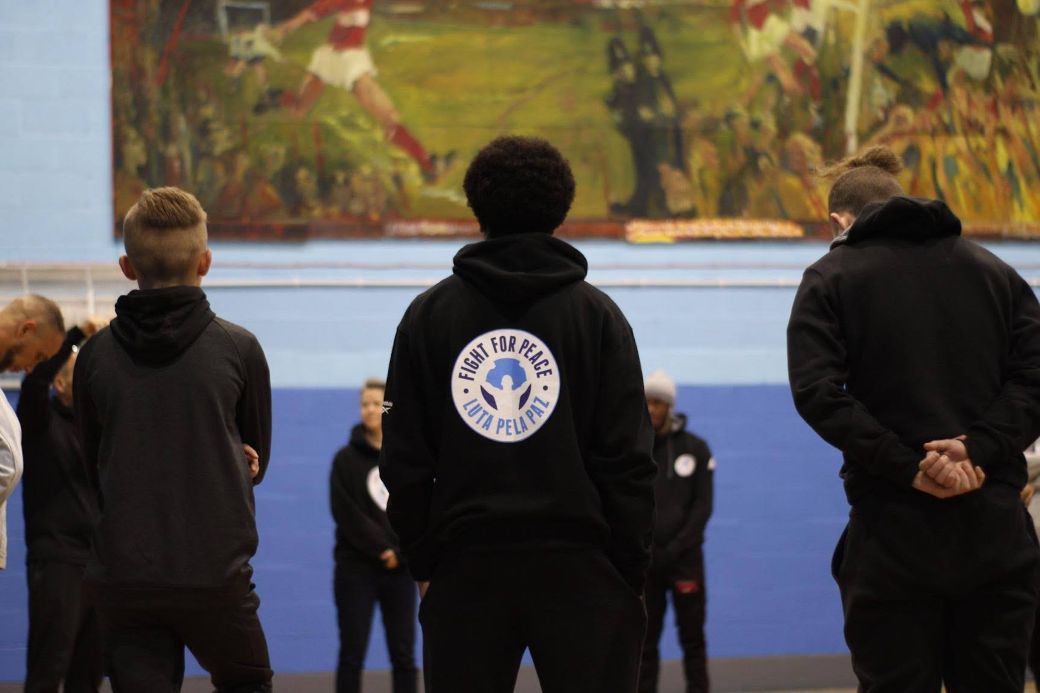
Fight for Peace is an innovative sport for development charity that leverages the discipline and energy of combat sport to inspire young people to reach their full potential. The organisation’s central mission is to empower young people to become champions both in the ring and in everyday life. Backed by funding from the Greater London Authority (GLA), Fight for Peace delivers a targeted Schools Programme designed specifically for Year 5 and Year 6 pupils who face risk of exclusion as they prepare for the transition to secondary school.
To support these young people at an important moment in their lives, Fight for Peace invests in a holistic delivery model directly within schools, combining two hours of weekly boxing and mentoring sessions throughout the entire academic year. By blending physical activity with mental and emotional development, the programme aims to improve overall wellbeing, strengthen engagement with formal education, and proactively reduce pupils' vulnerability to harm and exploitation. The ambition is clear: build confidence, establish strong relationships with trusted adults, foster emotional regulation, and instil transferable skills that serve children throughout their lives.
Navigating a critical transition
The transition from primary to secondary school represents a major milestone in a child's educational journey. For pupils already experiencing challenges in school, this period can trigger disengagement or exclusion. Fight for Peace sought to combat this challenge by not only providing an outlet for physical energy, but finding a structured, measurable way to equip these pupils with the essential skills required to navigate change successfully.
Embedding essential skills development was vital because physical activity alone does not automatically translate into emotional regulation or classroom engagement.
Integrating sport, mentoring, and essential skills
To bridge this gap, Fight for Peace fully integrated the Skills Builder Universal Framework into its approach, ensuring essential skills were treated as an active delivery pillar rather than an optional add-on. They combined the eight essential skills of the Universal Framework with their own 'Life Champions' framework, which focuses on twelve character-building practices including resilience, responsibility, communication, problem solving, and leadership.
Each month, delivery focuses on one specific essential skill, broken down into manageable weekly developmental steps. This skill is reinforced across two complementary environments:
- Boxing: Sports coaches use practical boxing activities and the Life Champions framework to help pupils experience and practise each skill.
- Mentoring: Mentors reinforce the exact same skill through structured reflection, discussion, and practical exercises using Skills Builder workbooks.
This intentional alignment provides repeated opportunities for pupils to practise, discuss, and evaluate the same skill across contrasting settings. By creating a shared language between coaches, mentors, and pupils, skills like Problem Solving and Teamwork become tangible, accessible, and easily recognisable in daily life.
Evidence of transformation and growth
By embedding essential skills into weekly delivery, Fight for Peace has achieved clear, observable improvements in how students interact with peers, manage their emotions, and engage in learning.
To track this development without disrupting delivery, Fight for Peace adapted the Skills Builder assessment tool and merged it with its own tool. For teachers, they introduced a Quick Group Assessment completed at the baseline and end of the project. Instead of scoring pupils individually, teachers evaluate overall group behaviours across the taught essential skills, wellbeing, and physical engagement.
The results from these assessments demonstrated positive progress across every single essential skill covered during the year. Teachers observed clear improvements in pupils' listening, speaking, problem solving, teamwork, and leadership, alongside noticeable boosts in session engagement and classroom confidence.
Complementing teacher observations, Fight for Peace designed My Journey Check-In, an accessible self-assessment tool inspired by Skills Builder. Using child-friendly statements and a simple five-point scale (Almost Never to Almost Always), pupils reflect on their personal progress across wellbeing, sport, and the essential skills.
This dual-assessment model offers a balanced, practical evaluation by combining professional observations with pupils' own reflective accounts.
Flourishing through sport and reflection
The impact of this integrated approach is illustrated by the journey of 'Rosa' (name changed), a primary school pupil who joined the programme quiet, reserved, and reluctant to speak in group settings.
Over the course of the academic year, staff witnessed a significant transformation. Rosa began approaching every session with deep commitment and resilience, regardless of the physical activity or the peers assigned to her group. Her confidence grew significantly; she began offering her opinions in discussions and eventually stepped up to lead activities with her peers. She also developed greater trust in programme staff, seeking out trusted adults to talk through her feelings when upset.
Rosa’s teacher captured this change, reflecting: "It has been a joy to watch her flourish into a confident, strong young person."
Rosa highlighted how the combination of physical exertion and structured cooldowns helped her process learning and manage her emotions:
"I enjoy the sessions because I can learn and get many tips to help me improve. I liked when we recalled our knowledge after boxing because it helps me calm down and get back on track."
Interestingly, Rosa’s self-assessment scores in certain areas, such as motivation, appeared lower at the end of the programme than at the start. Rather than viewing this as a setback, Fight for Peace recognised it as evidence of developing self-awareness. As young people mature emotionally, they evaluate their abilities more critically and realistically, a fundamental step in lifelong personal growth.
Pillars of effective skill delivery
Fight for Peace’s work demonstrates what it takes to seamlessly embed essential skill development into sport-based youth work:
- A shared language: Aligning sports coaching and mentoring around the same skill definitions creates clarity and consistency for young people across different environments.
- Bite-sized, cumulative progression: Focusing on one skill per month with weekly step-by-step goals prevents overwhelm and allows deep embedding.
- Proportionate, sustainable evaluation: Designing group-level teacher tools and child-friendly self-reflections ensures data collection remains feasible without adding administrative burden.
Equipping young people to thrive
Fight for Peace demonstrates that physical activity and essential skill development work together to maximise potential. By embedding structured skills and emotional reflection into the energetic world of sport, the organisation does far more than deliver exercise sessions. It equips young people at risk of exclusion with the shared language, self-awareness, and resilience required to navigate key educational transitions. In doing so, Fight for Peace shows what is possible when sport and essential skills come together: young people equipped with the confidence, clarity, and strength to step into their futures.
Start building essential skills today
- Explore the Framework: Learn more about how the eight essential skills can be embedded across all areas of education, work and life by exploring the Universal Framework.
- Join the movement: Partner with us to integrate structured skill building into your delivery, support young people, and build confidence that lasts a lifetime.