By clicking “Accept”, you agree to the storing of cookies on your device to enhance site navigation, analyse site usage, and assist in our marketing efforts. View our Privacy Policy for more information.
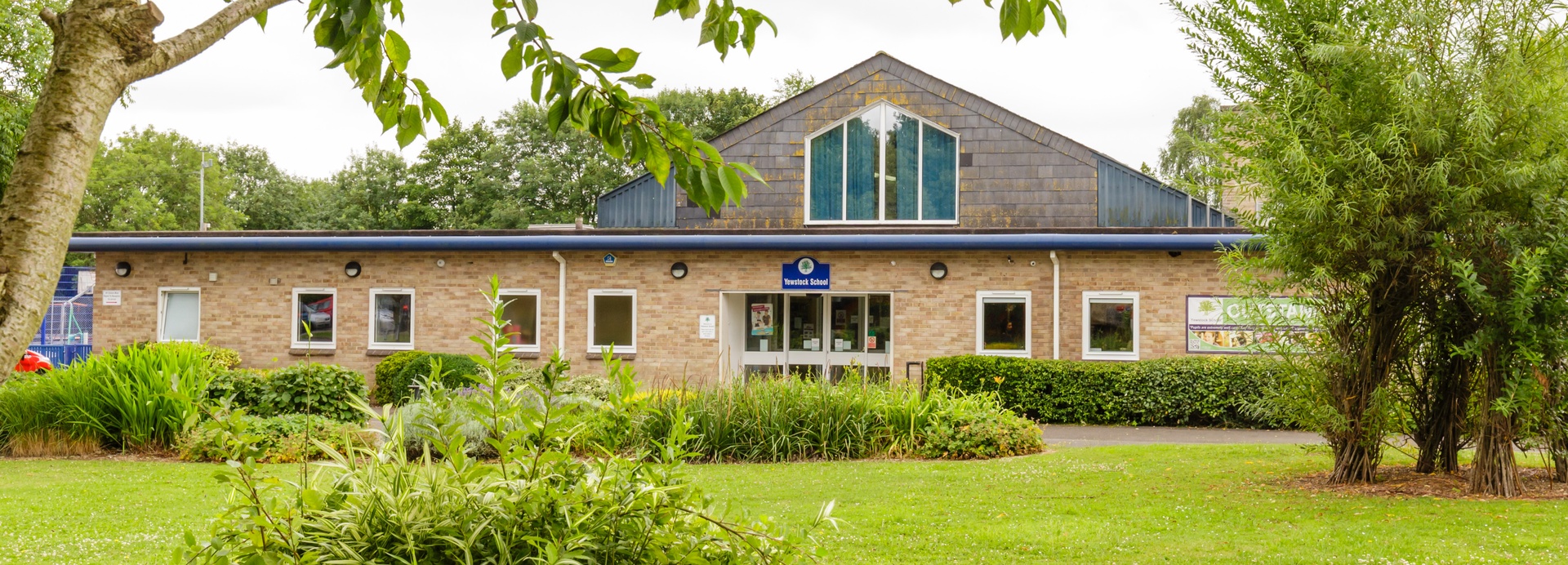
Yewstock School is a specialist SEND setting in Sturminster Newton, Dorset, catering for pupils with a wide range of learning difficulties and complex needs. Our school places a strong emphasis on developing the whole learner, with a particular focus on preparing pupils for greater independence in adult life.
I got involved with Skills Builder Accelerator because it aligns closely with both the ethos of the school and the curriculum I deliver. As a teacher of Work and Life Skills, I work daily with pupils on the practical and interpersonal competencies they will need beyond school, things like communication, problem-solving and the ability to work alongside others. Skills Builder gave us a shared framework and language for those essential skills, which has helped to make that learning more explicit and consistent for pupils who often benefit from structured, repeatable approaches.
My primary motivation was to strengthen pupils' independence. Many of our young people need deliberate, scaffolded opportunities to develop skills that others may acquire incidentally, and the Accelerator programme offered a meaningful way to embed that development into everyday classroom practice.
Overall impact
One of the most significant impacts of the Accelerator programme has been the structure it has brought to something that was already happening across the school. Staff at Yewstock have always worked to develop pupils' essential skills, but the Skills Builder framework has given that work a consistent shape and a shared language, making it easier to plan deliberately, assess meaningfully, and communicate progress clearly.
For pupils, a notable shift has been in their awareness of their own skills and progress. Having an explicit framework means pupils can begin to name what they are working on and recognise when they are applying a skill successfully.
A particular highlight has been the impact of the token-based reward system. Its success lies in the metacognitive process it encourages, when a pupil receives a token, they are asked to articulate why they earned it. Hearing a pupil say "I showed great problem-solving skills when answering this Maths question" demonstrates not just that they completed a task, but that they understand which skill they applied and how. For our learners, developing that awareness of their own thinking and abilities is a significant achievement, and seeing it happen in practice has been one of the most encouraging aspects of the programme.
Principle 1: Align
To build awareness of the essential skills, we have taken an approach across several areas. Essential Skills are displayed in the school hall, giving pupils, staff, and visitors a consistent visual reference point. Within lessons, the essential skills are explicitly taught through the Work and Life Skills curriculum, using the Skills Builder language and step descriptors to frame activities and learning objectives in a way that is accessible to our pupils.
To reinforce the value of the skills, we have introduced a token-based reward system that recognises pupils when they demonstrate essential skills in practice. This has been particularly effective in our setting, giving pupils a concrete and immediate acknowledgement of their progress.
Staff awareness has been developed through CPD and briefings, which has helped to embed the framework's language more consistently across the school. I also use Skills Builder terminology when writing feedback and reports, ensuring that the language pupils encounter in lessons is reflected in how their progress is communicated more formally
Principle 2: Plan
Ensuring that learners at all stages have the opportunity to build their essential skills is central to the way Yewstock operates. Across the school, all teachers contribute to the development of essential skills as part of everyday classroom practice, even where they are not explicitly using Skills Builder resources. The framework has helped to provide a shared language for something that was already happening organically across year groups.
Within my own teaching, the Skills Builder programme is embedded most directly into Work and Life Skills lessons across KS3 and KS4. Given the diverse range of needs at Yewstock, it is important that activities and targets are adapted for individual pupils rather than applied uniformly. The step descriptors within the Universal Framework have been particularly useful here, as they allow the same essential skill to be taught and assessed at a level that is appropriate for each learner, regardless of their age or stage.
As noted previously parents receive updates on pupil progress through Evidence for Learning, which captures essential skills development alongside broader learning outcomes. This ensures families have visibility of the skills their children are working on.
Principle 3: Measure
The primary tool we use to assess and track essential skills progress is Evidence for Learning (EfL). This allows staff to capture observations, photographs, and examples of pupil work that demonstrate the essential skills in action, building an ongoing record of each pupil's development over time. Because EfL is also shared with parents, it creates a consistent picture of progress that extends beyond the classroom.
Alongside this, our token-based reward system serves a dual purpose. As well as motivating pupils, the awarding of tokens and certificates provides a practical, visible indicator of when pupils have demonstrated an essential skill, giving staff useful formative information about which skills individual pupils are applying with confidence and which may need further reinforcement.
The insight gathered through these approaches has been valuable in a number of ways. It informs my planning, allowing me to adapt lessons and activities in response to where pupils are in their development. It also feeds into pupil targets and EHCP reviews, ensuring that essential skills progress is considered as part of the broader picture of each pupil's needs and achievements. At an individual level, it helps to identify pupils who may require additional support with particular skills, and crucially, it gives pupils themselves a tangible sense of their own progress something that is particularly meaningful for learners who do not always find it easy to recognise their own growth.
Principle 4: Teach
Pupils are given regular, dedicated opportunities to build their essential skills through structured lessons within the Work and Life Skills curriculum. Timetabling dedicated sessions ensures that direct instruction is consistent and intentional, giving pupils protected time to focus on their development.
Real-life and community-based activities play a significant role in how skills are taught and practised. Pupils regularly take part in community walks and work-related activities that provide authentic contexts in which to apply skills such as communication and problem-solving. These experiences are planned deliberately to complement classroom instruction.
Role play and scenario-based learning are also used regularly, particularly for skills that benefit from rehearsal in a safe environment. For many of our pupils, repeated practice in a structured, low-pressure setting is essential before they are able to transfer a skill confidently to real-life situations.
Principle 5: Practise
Whilst dedicated Work and Life Skills lessons provide the foundation for essential skills instruction, pupils are given regular opportunities to practise and consolidate those skills across a range of wider contexts.
Within school, essential skills are reinforced through other curriculum areas. In Maths lessons, for instance, pupils regularly practise skills such as problem-solving and staying positive when facing challenge, applying what they have developed in Skills Builder sessions to a different but complementary setting.
Extra-curricular activities provide further valuable practice opportunities. I coordinate the Duke of Edinburgh programme at Yewstock, which demands that pupils draw on a broad range of essential skills, including teamwork, leadership, and staying positive under pressure in genuinely challenging, real-world situations. This kind of extended project-based experience is particularly powerful for embedding skills that have been introduced in the classroom.
Community-based activities and work experience placements also play an important role, giving pupils the chance to practise essential skills in authentic environments beyond the school gates.
Principle 6: Apply
Helping pupils to see the relevance of essential skills in wider life is central to the Work and Life Skills curriculum at Yewstock.
Community walks and real-life outings form a regular part of pupils' experience, giving them the opportunity to practise skills such as communication and problem-solving in everyday settings including shops, public spaces, and public transport. These activities are planned with clear skills-focused intentions, so pupils understand which skills they are developing and why.
Work experience placements with local employers provide an authentic context in which pupils can demonstrate their essential skills to people beyond the school community, building confidence and awareness of workplace expectations.
The Duke of Edinburgh programme offers extended, challenging real-world projects that require pupils to draw on and sustain a broad range of essential skills over time.
Underpinning all of this is a focus on transition planning. For our pupils, developing essential skills is directly linked to their preparation for adult life, and this connection is made explicit throughout their time at Yewstock.
What's next
Building on the progress made so far, there are two clear priorities for the next stage of the programme.
The first is to embed Skills Builder more formally across other subjects and with other members of staff. While the framework is already influencing practice across the school informally, the next step is to work more deliberately with colleagues to ensure the language and step descriptors are used consistently beyond Work and Life Skills lessons. This will give pupils more frequent opportunities to apply and be recognised for their skills throughout the school day.
The second priority is to develop pupil self-assessment further. The metacognitive awareness that the reward system has begun to cultivate is encouraging, and the next step is to build on this by giving pupils more structured opportunities to reflect on and evaluate their own skills development.