By clicking “Accept”, you agree to the storing of cookies on your device to enhance site navigation, analyse site usage, and assist in our marketing efforts. View our Privacy Policy for more information.
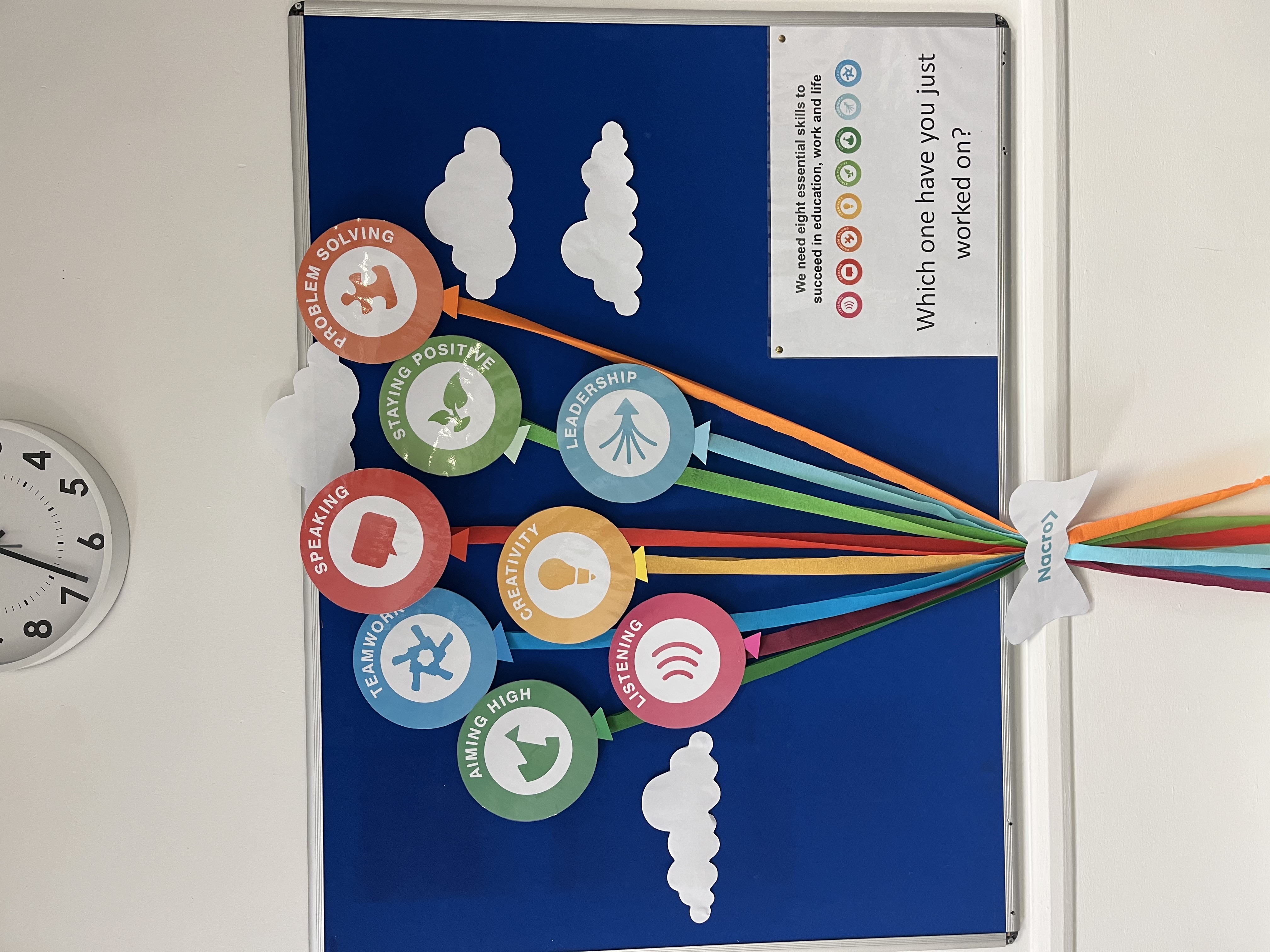
Nacro is a national provider of education and training for young people aged 16 to 18. We are part of the wider Nacro charity, which has been working for over 50 years to tackle social justice inequalities and support people across the UK to move forward in their lives. Nacro Education operates across 12 locations, supporting students from a wide range of backgrounds, including many with additional learning needs or disrupted educational experiences. In 2024–25, we embedded the Skills Builder Universal Framework with the aim to help students grow in confidence and prepare for their futures by developing the eight essential skills through dedicated lessons and by weaving them throughout everything we do. Over the past year, the partnership with Skills Builder has expanded into a whole-organisation strategy. Essential skills are now an integral component of teaching, learning, assessment, quality improvement, and employer engagement across all Nacro centres.
Overall impact
This year, we've seen students grow in ways that make us proud. Many are now more confident in describing the skills they have and how they use them. They talk more openly about what they're good at, and where they want to improve. Teachers have noticed students becoming more reflective and motivated, especially when they can see how the skills link to real-life experiences, like work placements. Staff are also feeling confident in using the Skills Builder language and building it naturally into their teaching. We have launched Skills Champions in each centre - staff who will lead on initiatives, share best practice, and support colleagues in embedding skills more deeply. Recognition and reward systems across centres have started to celebrate progress in these skills, helping essential skills feel like a regular and valued part of college life.
Principle 1: Align
The overarching aim this year shifted to making essential skills an authentic, everyday component of college culture. To achieve consistency across all centres, Nacro launched half-termly Skills Awards spanning nine categories aligned with the framework. Staff are encouraged to use specific skill step language when making nominations, supported by a new internal Skills Bulletin that links framework updates directly to broader college developments. Adopting a thematic focus has significantly simplified the language and integration for teaching staff.
At a strategic level, work is underway to formalise a Skills Policy that supports Ofsted focus areas around essential skills development. Strategic leadership underpins this expansion; management briefings clearly outline expectations for centre leaders to champion essential skills, driving accountability and institutional consistency.
Principle 2: Plan
The shared language of the framework is reinforced directly through the student journey from the point of enrolment. The onboarding system prompts students to reflect on their existing skills and aspirations right from day one. From their very first week, every study programme student takes part in a weekly Skills Hour. That includes students with high needs, who are supported by adapted materials based on the Skills Builder Framework. Our schemes of work are designed to revisit key steps over time, and the flexible structure means students can work at the right pace for them. Teachers also bring essential skills into vocational lessons and functional skills classes, helping students spot connections and practise what they’ve learned in different settings.
Principle 3: Measure
We’ve always been clear that the goal of Skills Builder isn’t just to collect evidence—it’s about helping students make tangible changes in how they behave, how they think, and how they approach new challenges. Real progress means seeing students gain confidence, independence, and life skills that extend beyond academic qualifications.
We measure this using the Skills Builder Benchmark tool three times a year. Where IT is a barrier, we use a paper-based approach such as the Daily Skills Diary. Data for over 300 learners shows measurable progression across the academic year, with most students advancing by at least one step in every skill and some making even greater gains. These insights inform student target setting, curriculum planning, and organisational quality improvement. Academic monitoring records incorporate Benchmark scores alongside personalised skills targets, encouraging meaningful discussions between staff and students about progress, areas for development, and future goals.
Principle 4: Teach
Every student has a protected Skills Hour in their timetable. The scheme of work, and provided resources, guides teachers step by step through the Universal Framework, with activities that are reflective, practical, and engaging. Because of this structure, teachers feel more confident delivering the content, and are even asking for coaching to keep improving. Students take part in group discussions, practical tasks and self-assessments, and many have said they enjoy the chance to think about their progress in a different way. The sessions are not treated as add-ons or extras, but they’re a valued part of the weekly sequence. Our quality assurance approach has also evolved to support continuous improvement. Traditional lesson observations have been replaced by Teaching Experiments, enabling colleagues to identify an aspect of their practice to develop, test new approaches and reflect upon their impact. An example experiment focused on embedding Essential Skills has been included, alongside the colleague's hypothesis and reflective evaluation.
Staff development and quality assurance have evolved significantly away from traditional compliance. Conventional lesson observations have been replaced by 'Teaching Experiments,' empowering educators to identify specific aspects of their practice to test, refine, and reflect upon. Dedicated Skills Champion training—including in-person sessions held for lead champions in London and Peterborough—has further equipped staff with the evidenc
Principle 5: Practise
Essential skills aren’t just taught once a week and forgotten. Essential skills are formally embedded into Nacro's written curriculum, requiring schemes of work to explicitly identify the skills being developed. Comprehensive CPD sessions use an Inset Day to explicitly link existing teaching strategies to essential skills. New staff onboarding places an emphasis on skill instruction, ensuring high visibility across all departments. Students are given continuous opportunities to apply these skills through interactive, varied learning formats.
Principle 6: Apply
Connecting classroom learning to real workplace expectations remains a central priority. Nacro actively engages employers using Skills Builder terminology so external partners reinforce the framework during talks and workshops. A standout highlight was a virtual employer engagement event delivered in partnership with Lloyds Banking Group, where students presented business ideas and received direct feedback from industry professionals. The Start-Up Success Challenge Day gave students practical experience in applying skills to real-world scenarios such as budgeting. Across the year, skills have been brought to life through dynamic activities ranging from TikTok-style video creation and courtroom roleplays to Nacro-wide student debates, demonstrating the universal relevance of essential skills across diverse topics.
What's next
Next year, we look forward to collaborating closely with Skill Champion staff members to drive student progression even further. We will actively involve the Student Council and incorporate wider student feedback to continuously improve the programme. Additionally, we are partnering with the Student Experience team to embed essential skills directly into employer visits, and looking to expand the use of the Framework into other Nacro areas, including youth justice services.