By clicking “Accept”, you agree to the storing of cookies on your device to enhance site navigation, analyse site usage, and assist in our marketing efforts. View our Privacy Policy for more information.
At St Patrick's, we are a secondary school working with a cohort of 880 students and staff across all year groups. We committed to embedding the Skills Builder Universal Framework 2.0 to ensure that essential skills were integrated from our youngest learners through to post-16 leavers. Managing a varied student body, our goal was to build clear aspirations and ensure our students developed the confidence and competency needed to progress into higher education, direct employment, gap years, or local engineering apprenticeships.
Overall impact
By embedding the framework across our setting, we have created a consistent culture of skill development. Our students gained a clearer understanding of their strengths, using essential skills language during projects, cross-curricular activities, and employer encounters.
Teachers aligned well with the programme, using standardised framework displays and Hub resources to guide learning. The strategy strengthened our career pathways and provided a structured approach to recognising and celebrating student progress across all year groups both inside and outside of the classroom environement.
Principle 1: Align
We ensured that the eight essential skills were clearly understood across our entire school community. We updated Universal Framework 2.0 displays across all classrooms and communal areas, and used posters and stickers in student books to reinforce key concepts. We also incorporated skills language into our learning and teaching policy and merged it into our positive behaviour management system, allowing staff to award merits linked to house points.
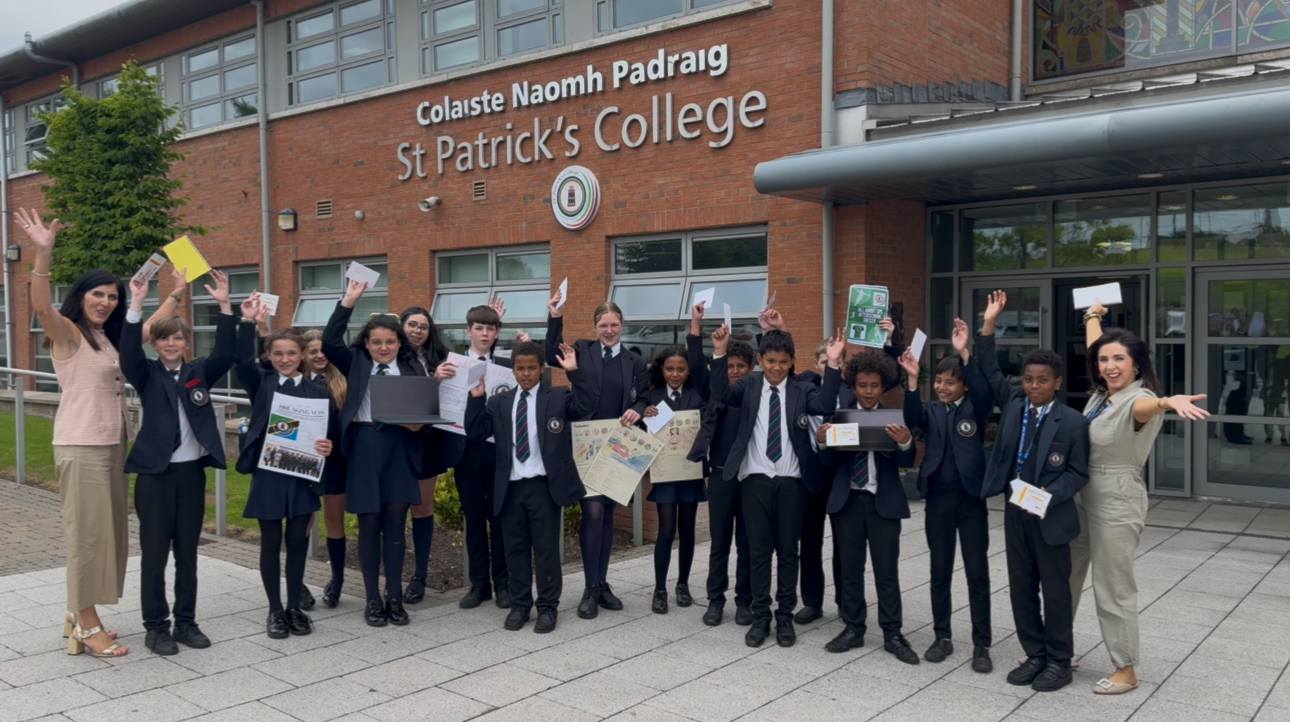
We integrated our focus on oracy with Skills Builder and regularly referenced the skills during school assemblies. Dedicated initiatives like the "This is Me" whole-school book project, Engineers Week, and option days directly highlighted skill connections. Additionally, we demonstrated regional advocacy by hosting staff and students from Hazelwood College to showcase our progress.
Principle 2: Plan
We committed to delivering essential skills instruction across all key stages, embedding the framework for all 880 students. In Year 8, students engaged in targeted initiatives such as the "Number Crunching" and "Breaking News" projects. We brought these to life at St Patricks College by connecting with local employers and businesses. Our older students built upon these foundations through the Year 10 "Quick Start" project, Year 11 Industry Day, and mock interviews for Years 12 to 14.
We aligned skill development directly with our broader careers program. This continuous approach supported our leavers as they transitioned into post-secondary destinations, including university, employment, and local engineering apprenticeships.
Principle 3: Measure
Our staff completed baseline assessments across classes using the Skills Builder Hub to establish initial skill levels. To evaluate student perceptions and program effectiveness, we conducted end-of-year student voice surveys via Google Forms for Year 8 and Year 9, receiving very positive feedback. It is evident that Skills Builder is being consistently embedded across school from the language and concepts pupils shared in their student voice reviews.
While teacher changes created some inconsistencies in completing benchmarking across every class, staff worked toward completing re-assessments by the end of the calendar year. We also explored using additional assessment tools to review overall student progress and impact.
Principle 4: Teach
We allocated dedicated timetable space for explicit skill instruction, providing Year 8 students with a 1-hour and 20-minute weekly block focused on Skills Builder. Staff delivered lessons directly from the Hub, pitching instruction at the correct step based on baseline data. This commitment on a weekly basis across the whole school has been central to ensuring the Skills Builder programme is seen as part of the whole school programme and given the recognition and important that it deserves.
We mapped essential skills to specific student group needs to ensure targeted delivery. Staff were directed to utilise the framework across their teaching, for example, we used Oracy speaking passports in collaboration with the English department to support structured skill acquisition. The curriculum guides provided have been a great way to continue practicing essential skills throughout school.
Principle 5: Practise
We reinforced essential skills across various subjects, supported by cross-curricular projects like Engineers Week and Home Economics collaborations. Staff linked classroom displays and rewards to daily learning, utilising skill stickers and merit points. This recognition and re-enforcement of essential skills and essential skills language has helped build confidence amongst our students.
Our Year 11 students attended an external Industry Day where partner organisations referenced the essential skills. Furthermore, students regularly practiced their skills through extracurricular activities and enrichment, including the Duke of Edinburgh Award, Pope John Paul Awards, the ABP Youth Competition, the EOS Young Reporter for the Environment, the Schools Energy Competition, and Primary Engineers.
Principle 6: Apply
We connected skills to real-world experiences through employer encounters and practical projects. Year 8 students completed the "Number Crunching" project with local business The Food Doc to design healthy snacks, and presented their "Breaking News" media project to peers and parents. Year 10 students participated in the Young Enterprise "Quick Start" project, finishing with a "Dragons' Den" style pitch.
Senior female students engaged with professional mentors through the "Sisters in Project" initiative to inspire future leaders. We hosted external guests, including local business owners, credit union representatives, and a BBC weather forecaster. Students also applied their skills off-site through STEM careers sessions, construction projects, work experience placements, and external competitions.
What's next
Looking ahead, we plan to complete the full re-assessment of all student groups on the Skills Builder Hub by the end of the calendar year to ensure comprehensive data tracking. Through our re-enrolment in Accelerator Plus, we will gain access to premium resources, projects, and challenge days for the upcoming academic year. We also intend to develop an electronic staff handbook featuring clickable links to better induct new joiners and maintain consistent framework delivery across all departments.