By clicking “Accept”, you agree to the storing of cookies on your device to enhance site navigation, analyse site usage, and assist in our marketing efforts. View our Privacy Policy for more information.
Located at the intersection of Surrey, Hampshire, and West Sussex, our independent prep school serves approximately 450 children aged 2 to 13. For some time, we've emphasised and taught the importance of behaviours for learning. However, we faced challenges in measuring these behaviours and lacked a structured framework to support our teachers effectively. A colleague with industry experience recommended the Skills Builder framework, and it has proven to be exactly what we needed. Skills Builder offers a wealth of resources and clearly defined, measurable steps, which have been instrumental in tracking our children's progress. Additionally, the robust support from our Skills Builder associate has been invaluable. By integrating Skills Builder into our curriculum, we now have a comprehensive and structured approach that not only supports our teachers but also enhances our students' learning experience. The framework’s simplicity and effectiveness have made a significant positive impact on our educational environment.
Overall impact
It has been fantastic to have the support of our Education Associate this year. We have thoroughly enjoyed sharing our progress and have greatly valued the experience, ideas, and motivation she brought to our regular meetings.
Staff across the school have become much more confident in embedding the essential skills into their teaching, using the shared language and wide range of resources available through the Skills Builder Hub. This increased confidence has led to more consistent use of the language across all areas of school life, ensuring that children develop a clear and practical understanding of what the eight essential skills look like in action.
Our whole-school reward system is closely aligned with the skills, alongside our own Keys Diploma, which continues to motivate students to reflect on and develop their skillset. The annual Challenge Days remain a highlight for both pupils and staff—fun, memorable experiences that give children the opportunity to apply their skills in meaningful and exciting contexts.
Another standout initiative is our Essential Skills Celebration Tree. When children are recognised in celebration assemblies for their skill use, they add a coloured, skill-embossed leaf to the tree. This not only celebrates individual achievement but also helps us track which skills are being recognised most frequently, guiding future areas of focus.
Now in our third year of the programme, we feel more motivated and better equipped than ever to continue developing our practice and deepening the impact of the essential skills across our school community.
Principle 1: Align
This year our school has embedded essential skills further into strategic planning and policy, ensuring that the language of skills is consistently used across the entire school community. The eight core skills are woven into our school values and reward systems, including weekly celebration certificates and house points aligned with a different skill each week.
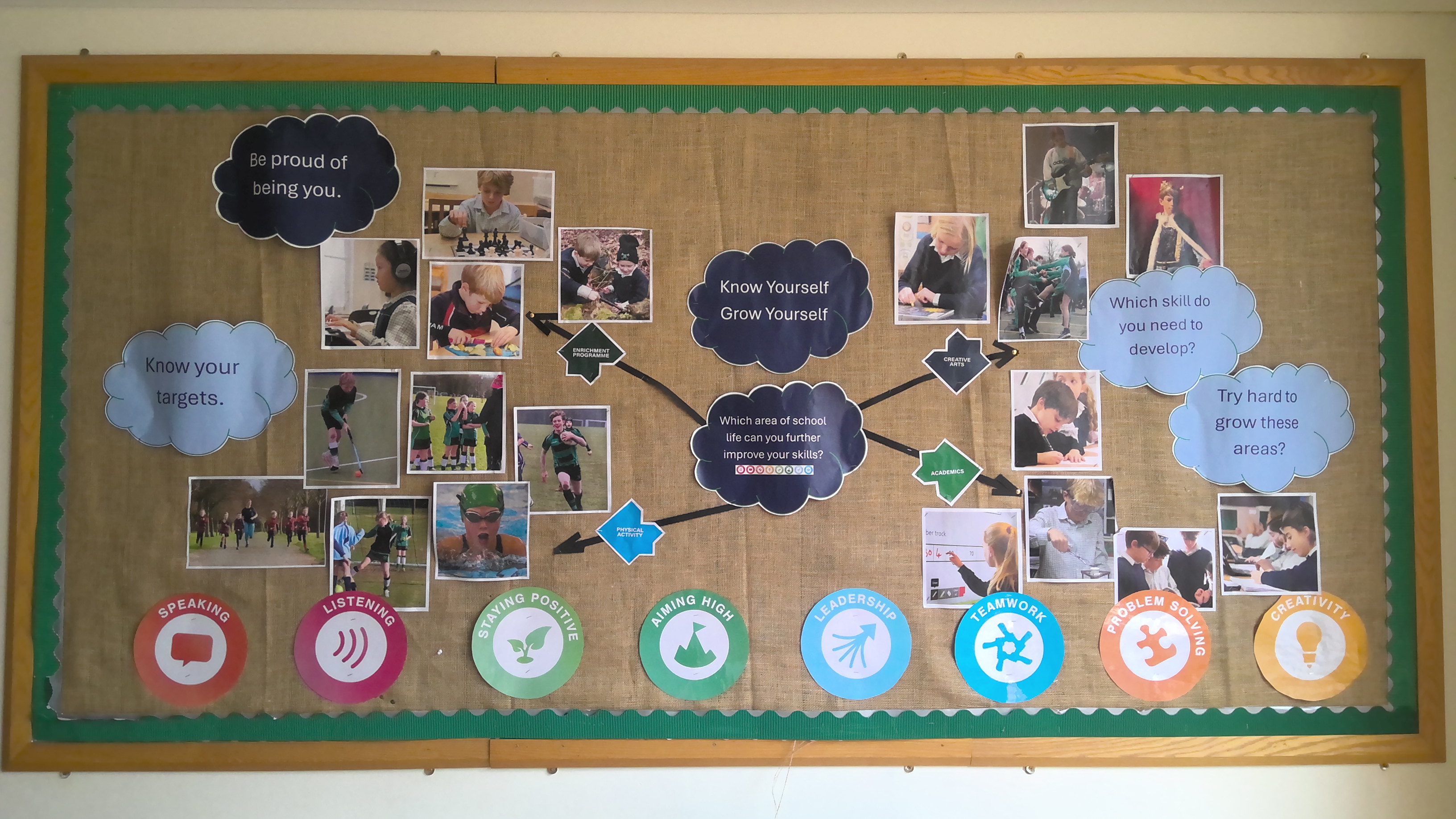
Skills are reinforced in assemblies, communal areas, and classrooms via prominently displayed icons, strengthening a shared understanding among staff and students.
Many year groups now include a weekly lesson dedicated to teaching specific skills, and every lesson opens with both a learning objective and a skill objective—making development tangible and measurable.
Our weekly parent newsletter includes a “Homezone” homework task tied to an essential skill, and termly reports provide updates on students’ skill progress alongside academic grades. Additionally, curriculum evenings feature Skills Builder workshops to help parents understand and support this framework at home.
By keeping focus simple and consistent, using common language, visual cues, explicit teaching, parental engagement, and ongoing measurement, we firmly align with the Skills Builder principle of Keep It Simple.
Principle 2: Plan
All staff regularly engage with the Skills Builder Hub; familiarity and confidence in using its online resources have grown significantly this year. Most year groups now teach essential skills weekly, using short lessons, skill-focused lessons, and assemblies to introduce and reinforce them.
Several CPD sessions led by our Skills Associate have ensured staff are fully equipped to use the Hub’s resources effectively. Parents are invited to an annual Skills Builder workshop at the start of each year, raising awareness of the framework and equipping them to support their children’s development at home alongside “Homezone” homework tasks.
Crucially, skill development is embedded in everyday teaching: students are expected to both practise and apply essential skills in nearly all lessons. It is hoped that with this sustained and progressive approach and deliberate practice, mastery of the skills will develop.
Principle 3: Measure
Most classes in Reception–Year 6 consistently use the Skills Builder assessment tool, while Year 7–8 subject teachers are adopting it—a focus for continued improvement next year. The tool’s stepped objectives have been invaluable, offering clear, progressive targets for teaching and celebration.
Every classroom displays the expanded framework with skill icons and definitions, enabling consistent language use and helping children understand exactly what they’re developing.
This year we have embedded the assessment language into end-of-term reports, so parents see the same language at home. Our flagship initiative this year is the Keys Diploma, where children record evidence of their skill development in individual “skills passports.” This self-tracking fosters pupil ownership, helping them recognise strengths and pinpoint areas for growth. At the end of each year, we award Skills Awards to children who have demonstrated significant progress and dedication to skill development.
By combining formative assessment, visible frameworks, child-led portfolios, consistent reporting, and celebratory awards, our “Measure It” approach ensures measurement isn’t just data—it actively drives ongoing, purposeful development in essential skills.
Principle 4: Teach
Embedding the Skills Builder language consistently across the school has remained a clear priority this year. From Reception to Year 4, each class has a dedicated weekly Skills Builder lesson, with a single skill explicitly taught and explored in depth. For Years 5 to 8, Form Time is used to focus on the skill of the week, often using short stories or lesson resources to support structured teaching.
To extend learning beyond the classroom, a weekly homework task linked to the focus skill is included in the school newsletter, encouraging families to engage in skill development at home.
We also run an annual whole-school challenge designed to bring the skills to life. This year’s Crime Scene Challenge was a great success. Staff dressed up as suspects and transformed the Head’s office into a crime scene, creating an immersive experience that allowed pupils in Years 1 to 6 to apply and demonstrate their skill development in a meaningful context.
Finally, regular assemblies reinforce the focused skill through direct instruction and shared reflection, further supporting a consistent and structured approach across the school.
Principle 5: Practise
We have embedded opportunities for children to practise their essential skills beyond the classroom through a variety of initiatives. This year, elements of the Skills Builder Projects have been used within our extra-curricular clubs and weekly enrichment lessons for Years 1-4, allowing children to apply skills in creative, practical contexts.
We plan to continue hosting an annual Challenge Day, as these have proven highly engaging and effective in providing extended opportunities for meaningful skills practice.
In every lesson across the school, teachers now include a skill objective, ensuring that all children have regular, purposeful opportunities to practise a specific skill in different subject areas. This consistent approach helps pupils understand the focus skill and recognise how it applies across the curriculum.
Our ‘Keys Diploma’ remains a key motivator for our children. This award encourages children to gather evidence of progress in all eight essential skills across four key areas of school life: academic learning, the creative arts, sport, and enrichment. It supports pupils in building a personal portfolio that celebrates their strengths while identifying areas for further development.
Our long-term aim is for our children to transition to their senior schools able to articulate their progress in these essential skills as confidently as they do their academic achievements
Principle 6: Apply
This year, we have made a conscious effort to connect essential skills to real-world contexts by inviting parents, external speakers, and visiting charities to explicitly link their talks and experiences to the Essential Skills. This has helped pupils understand the relevance and transferability of these skills across a wide range of careers and life situations. We’ve also incorporated selected Skills Builder Projects and whole-school challenges, which have given students authentic opportunities to apply the skills in meaningful and engaging ways.
Teachers are encouraged to model how they themselves use the essential skills in everyday life, helping to normalise skill use beyond the classroom and deepen pupils' understanding of their value.
Looking ahead, we plan to strengthen this area further by making greater use of the employer resources and video content available through the Skills Builder Hub. This will help us provide even more real-life examples of how these skills are used in the workplace.
What's next
Looking ahead, our key priorities include making greater use of the career and work experience resources available through the Skills Builder Hub. We are committed to strengthening the connection between essential skills and the world of work, helping students see how their learning links to future aspirations.
We will also ensure that all teachers are confidently using the online Skills Builder tracking tool, enabling us to monitor progress consistently and identify areas for further support.
Maintaining high staff motivation and engagement remains central to our success. To keep the essential skills at the heart of our curriculum, we will continue to prioritise regular team meetings, ongoing training, and the sharing of best practice across year groups and subject areas.